
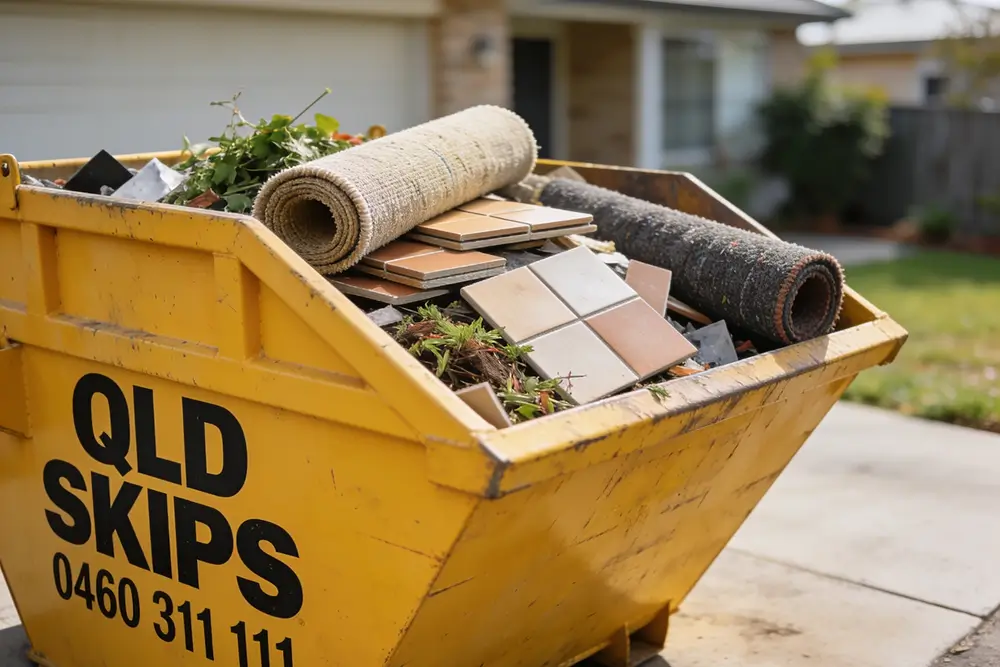
"Sustainable waste management" sounds abstract until you're standing next to a skip bin full of bathroom tiles, old carpet, and garden clippings, trying to work out what actually happens to it all next. In practice, it comes down to one simple hierarchy: avoid creating waste where you can, reduce what's left, reuse and recycle what's reusable, and only send to landfill what genuinely has nowhere else to go.
Why sorting at the source matters most
The single biggest factor in whether your waste gets recycled isn't the facility it ends up at — it's how clean the load was when it left your property. Mixed loads with food scraps, liquids, or plasterboard mixed through recoverable materials are harder and more expensive to process, and more of that material ends up in landfill by default. Keeping streams separate — green waste apart from concrete and masonry, household items apart from both — is the single habit that does the most environmental good.
What happens to different waste streams
- Green waste (branches, clippings, leaves) is mulched or composted, going back into gardens and parks rather than off-gassing methane in landfill.
- Concrete, bricks, and tiles are crushed into road base and construction aggregate — genuinely reused, not just "recycled" in name.
- Metal, cardboard, and clean timber go back into manufacturing supply chains.
- General household waste that can't be recovered goes to landfill as a last resort, which is why keeping it separate from recoverable materials matters so much.
For renovators and businesses
Construction and renovation sites produce the highest volumes of waste per project, and it's also the waste stream with the most recovery potential — concrete, timber, and metal are all highly recyclable if kept clean. A mixed heavy waste skip suits general demolition and renovation debris; if your job is mostly rubble, a dedicated concrete skip recovers more and usually costs less per tonne than paying mixed-waste rates on masonry.
Simple household habits that add up
- Separate green waste from general rubbish before it goes in any bin.
- Flatten cardboard and keep it dry and separate — wet cardboard can't be recycled.
- Keep a small "ask first" box for batteries, paint tins, and e-waste rather than guessing.
- For a big clean-up, a household cleanup skip sized to the job avoids both overflow and paying for space you don't use.
None of this requires special equipment or expertise — just separating streams before they're combined, and choosing the right bin for what you're actually disposing of. QLD Skips Hire can help you pick the right size and stream for your project — book online or get in touch for advice.